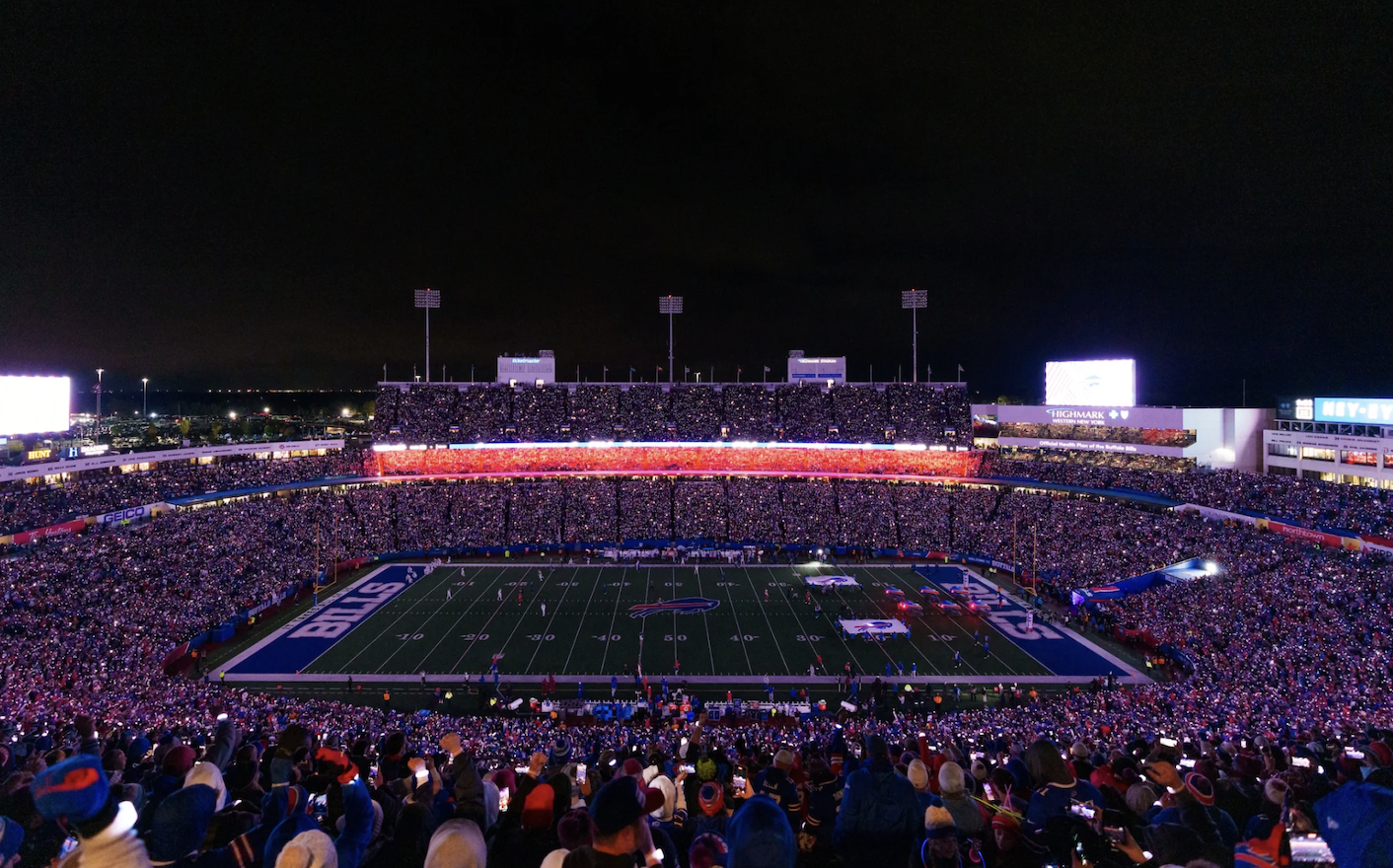
At CrowdSync, we've spent years building the technology that turns a crowd into the show itself. Every rail light we install, every wristband we sync to a downbeat or a game winning play, comes from watching audiences want to be part of something bigger than a seat in the stands. That vantage point puts us in a good spot to talk about where this industry is actually headed in 2026, and the data backs up what we're already seeing on the ground.
According to Verified Market Research, the market for synchronized LED wristbands was valued at roughly $191 million in 2023 and is projected to reach $632 million by 2031, a compound annual growth rate near 16%. Separate wearable technology forecasts put the broader event lighting category even higher, projecting growth from $0.8 billion in 2025 to $1.7 billion by 2034.
The organizations investing in this kind of activation span pro sports, brands, and touring artists. CrowdSync's own installations include 6,500 rail affixed, RF controlled LED lights built into Hard Rock Stadium for Miami Dolphins games, plus work with the Dallas Cowboys, Coca-Cola, Kygo, FreemanXP, and University of Kentucky athletics. On the ground, that same technology has lit up 30,000 fans at a Chicago Fire match at Soldier Field and 10,500 concertgoers at Parker McCollum's show at the Moody Center in Austin. You can see more of this work on our case studies hub.
For decades, lighting at a concert or a game happened to the crowd. A rig above the stage. A scoreboard display. Spotlights sweeping the field. That direction has reversed. The crowd has become the light show.
Fans don't just want to watch a show anymore. They want to be part of it. Surveys of concert and festival attendees consistently point to the same craving: a 360 degree, immersive experience rather than a one directional performance. A synchronized wristband moment, thousands of individual lights pulsing in unison to a drop, a chant, or a game winning play, delivers exactly that. It also happens to be one of the most reliably shareable moments of the night, which is a big part of why organizers keep coming back to it.
Wristbands are triggered wirelessly using RF (radio frequency) or infrared signals, letting a single operator control colors and timing across an entire venue. Many systems integrate directly with existing DMX lighting rigs so the crowd effect is cued alongside the stage show. Because there's no line of sight or per unit control required, the same system scales from a 500 person corporate event to a 50,000 seat stadium.
The next layer is data. Sensors, sound monitors, and crowd heat maps are starting to feed live inputs directly into lighting systems, so intensity and color respond to how the crowd is actually moving, not just a pre-programmed cue sheet. That mirrors a broader shift already underway in commercial lighting: an estimated 30% of new commercial lighting installations in 2026 will include integrated sensors or IoT connectivity, turning lighting into a live data layer instead of a fixed setup.
This is infrastructure now, not a novelty add on. Venues are increasingly building rail and section based LED lighting into permanent installations instead of one off rentals, and the organizations already adopting synchronized wristbands span professional sports, major brands, and touring artists.
For anyone planning a 2026 event, the real question is where crowd synced lighting delivers the biggest moment: the headline drop, the walkout, or the game winning score. Get in touch with CrowdSync to build a custom lighting activation for your next stadium, festival, or tour.
Sources:
.svg)



.svg)
.svg)
.svg)

.svg)